Late Spring
Repairs Before Monsoon
Tracing a faint stain in spring lets the repair happen in calm weather, ahead of the first heavy storm of summer.

Commercial roof leak repair in Yuma that starts at the stain, follows the water back across the roof, and fixes the spot where it got in.
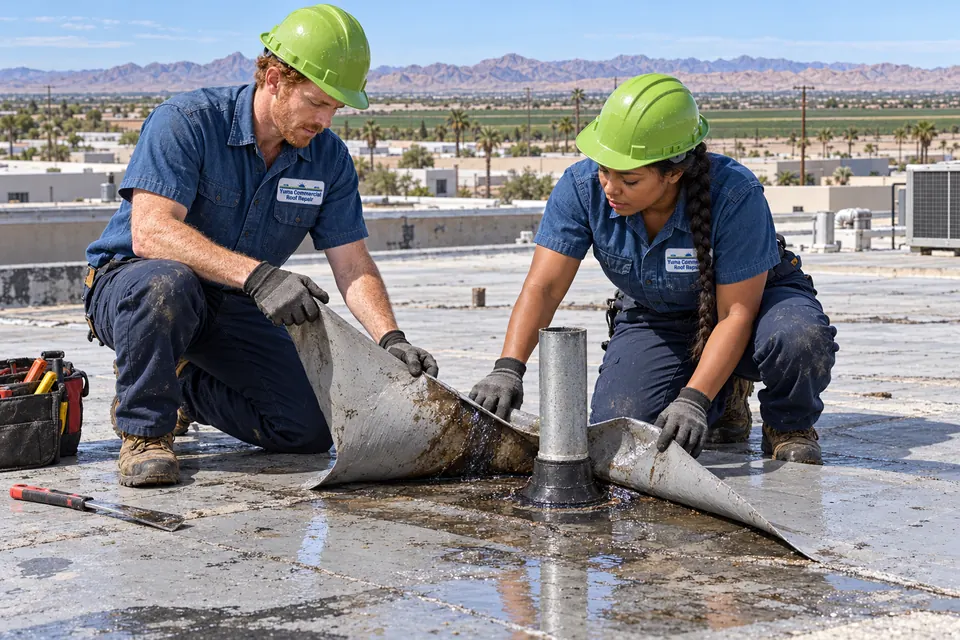
One leak usually means one failed detail. Several leaks in one season can mean the roof itself is wearing out. Here is how we tell them apart.
Water travels before it shows up inside. These pairs show common gaps between the stain staff see and the roof detail that let water in.
A stain in the middle of an office can trace back across the deck to a seam or curb many feet away.
Water slides along the top of insulation boards and drops at board joints, so the stain shows up downslope.
Fixtures and sprinkler heads give water an easy way through the ceiling, so leaks often appear there first.
Curbs under rooftop units are a common source, with cracked caulk or split flashing at a corner.
Leaks that appear days after a storm usually mean water sat in the insulation before it found a way down.
A ring left by standing water marks a low spot where a small opening gets a long soak.
A repeat drip in one place points to one failed detail that earlier patches missed.
Patches made with mismatched material often lift at one edge, and water gets under the patch itself.
Streaks down the face of an inside wall usually start at the roof edge or a wall transition above.
Shrinking membrane pulls flashing off the parapet, opening a gap right where the wall meets the roof.
Leak calls move from tracing to temporary control to the lasting repair. These are the tools and repairs used at each stage.
| Stage | What We Do | What You Get |
|---|---|---|
| Trace the water | Map the stain against the roof layout, then check every seam, curb, and drain upslope of it | A short list of suspect spots on a roof sketch |
| Confirm the entry | Take moisture readings and run controlled water tests one area at a time | The one detail that lets water in, photographed |
| Slow the water | Seal an open seam with compatible tape, cover a puncture, or clear a plugged drain | Less water inside until the lasting repair |
| Repair for good | Repair the membrane, flashing, and wet insulation around the entry point once it dries | A tested repair and photos of the work |
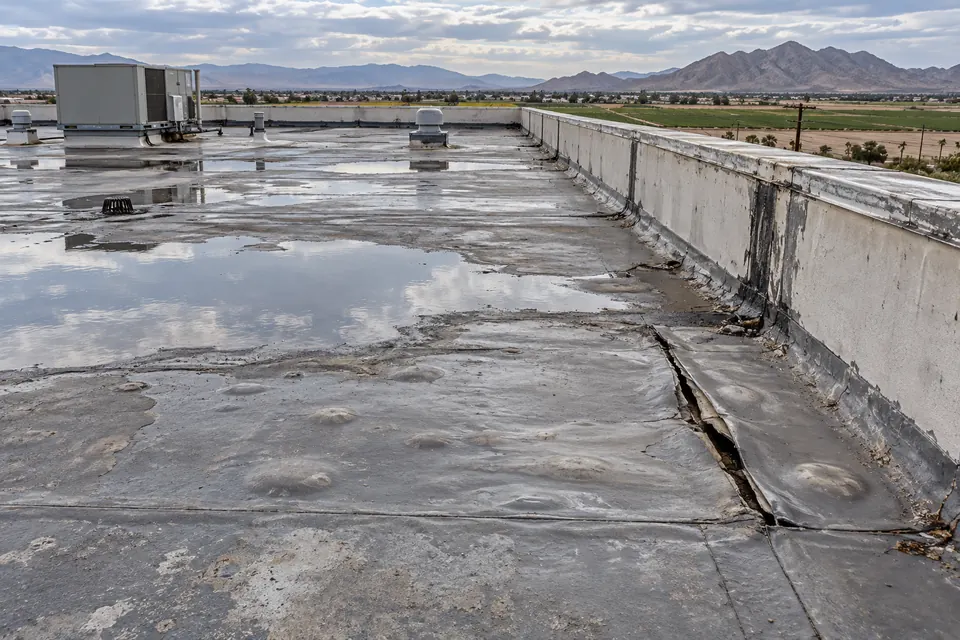
A small leak in Yuma can stay hidden for months. Fixing it when you first see it keeps each season from adding damage inside.
Tracing a faint stain in spring lets the repair happen in calm weather, ahead of the first heavy storm of summer.
Dry insulation keeps the space below cooler. Wet boards lose that value just as highs pass 110°F.
A sealed entry point means the next storm stays on the roof, away from racks, ceilings, and equipment below.
Cooler months give the roof time to dry out, so wet insulation around the entry point can come out and be replaced.
Call and tell us where it is dripping and what sits on the roof above. We can talk through temporary steps while the visit gets set up.
Leak calls move fast at the start and slow down at the tracing step, because finding the real entry point is what makes the repair last.

Ceiling stains and wet spots inside get located, then the roof above gets walked with every seam, curb, drain, and flashing noted.
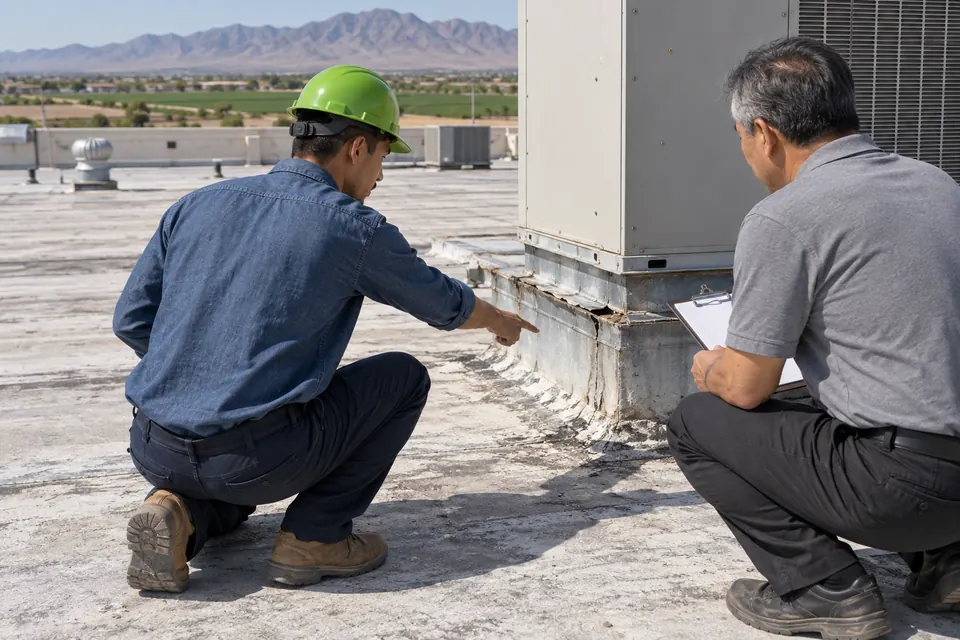
Moisture readings and controlled water tests, one area at a time, narrow the leak to the detail that lets water in.
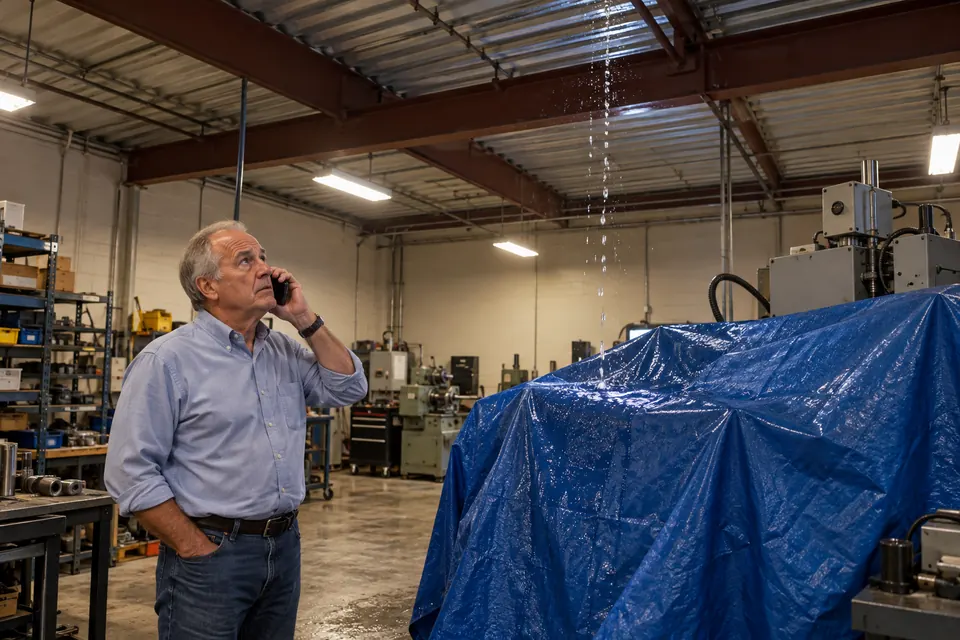
Temporary control, such as tape on a split seam or a cleared drain, buys time while staff move stock away from the drip.
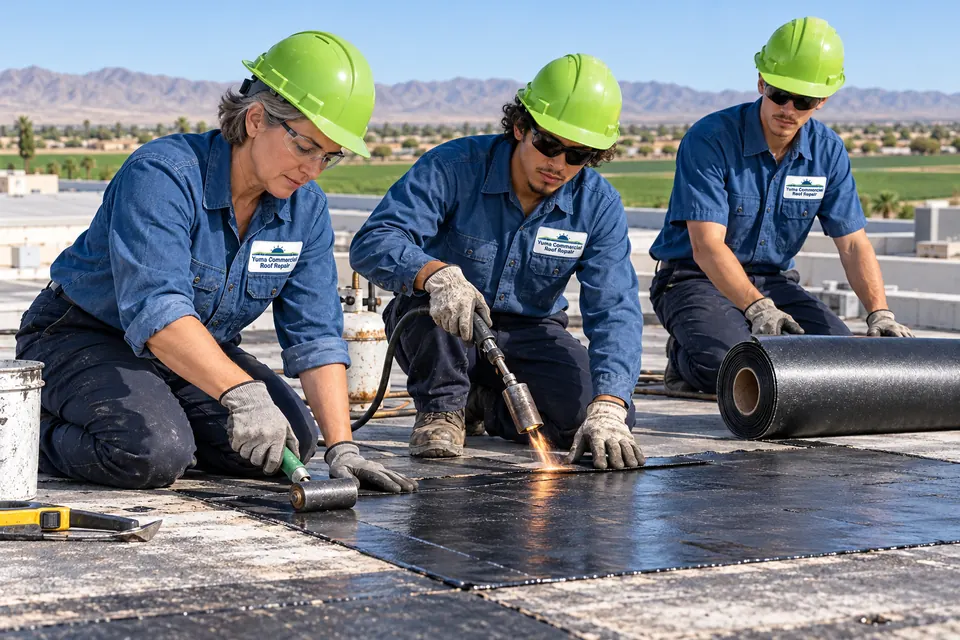
After the area dries, the crew repairs the membrane and flashing at the entry point and replaces wet insulation around it.
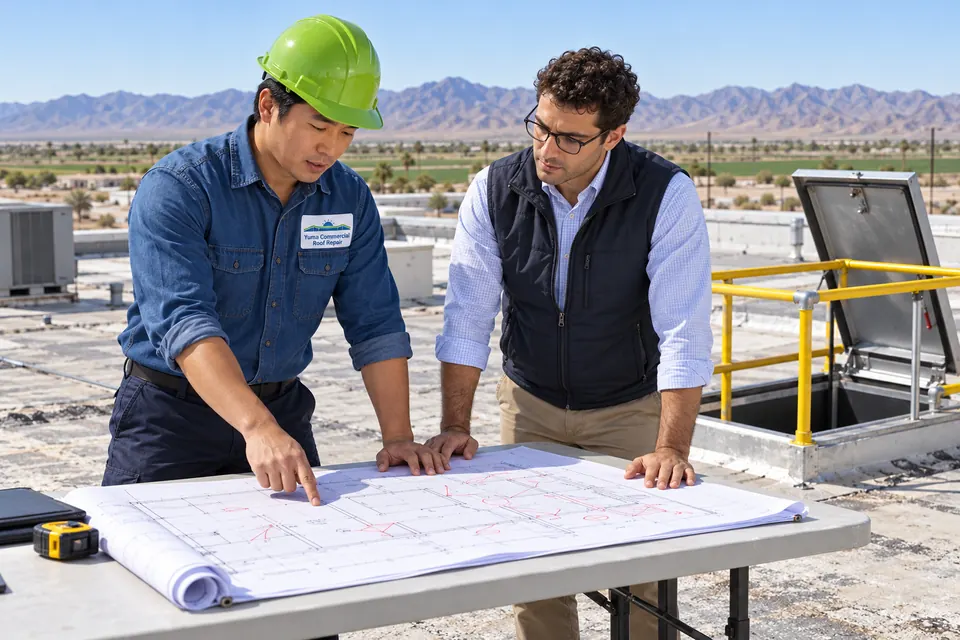
A second water test confirms the repair, and you get photos of the entry point before and during the repair.
Once the entry point is found, the repair usually falls under one of these services.

Flat roof repair takes over when the leak traces to a seam, drain, curb, or parapet on a membrane or built-up roof.
On This Repair Ticket
Metal roof repair takes over when the leak traces to a screw row, a panel lap, rust at a cut edge, or a skylight panel.
On This Repair TicketAnswers about finding and stopping leaks on Yuma commercial roofs.
Temporary leak control slows the water. On a flat roof that can be compatible tape over an open seam, a cover over a puncture, or clearing a plugged drain so water stops backing up.
Inside, staff can move stock and cover equipment. Once the roof dries, the crew returns to the entry point and repairs the membrane, flashing, and wet insulation.
Water travels first. It can enter at a failed seam, run across the deck or along insulation boards, and drip at a joist, a light fixture, or a low spot many feet away.
By testing. We flood or spray one suspect area at a time with controlled water while someone watches inside, so the drip can be tied to one seam or curb.
Only temporarily. Most lasting repairs need a dry surface to bond. Tape, covers, and cleared drains slow the water until the roof dries enough for the real repair.
Ceiling tiles are inside work and stay with your building staff or interior contractor. The roof repair stops new water, so replaced tiles stay clean.
We water-test the repaired area after the repair and watch the inside location for drips. Photos of the entry point and the repair go to you with the test result.
Call or request an estimate and tell us where the water lands. We trace it back across the roof and repair the entry point.
Leave a name and number and we will call to talk through the leak or damage.
Or call now: (928) 436-4828