Late Spring
Scuppers Open Before Storms
Cleared scupper boxes send water out through the wall instead of pooling against the base of the parapet.

Commercial roof repair in Downtown Yuma, where flat roofs hide behind parapet walls and most leaks start at the wall instead of the open field.
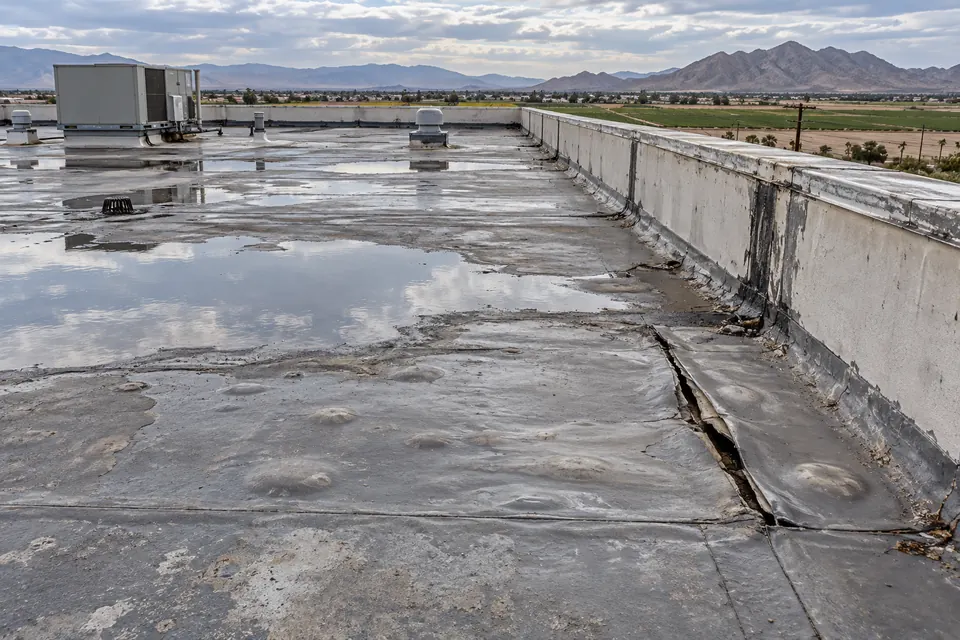
Older downtown buildings carry their roofs inside tall masonry parapets. Coping, counterflashing, and through-wall scuppers are where water gets in.
Coping caps crack at their joints, and counterflashing set into the brick works loose over the years. Rain then runs down the inside face of the parapet, behind the membrane flashing, and shows up as a stain along an outside wall.
A membrane repair behind the parapet is out of sight from the street. Rebuilding a parapet cap or changing edge metal on a visible roof is different, because the City of Yuma Design and Historic Review Commission reviews exterior changes in the historic districts.
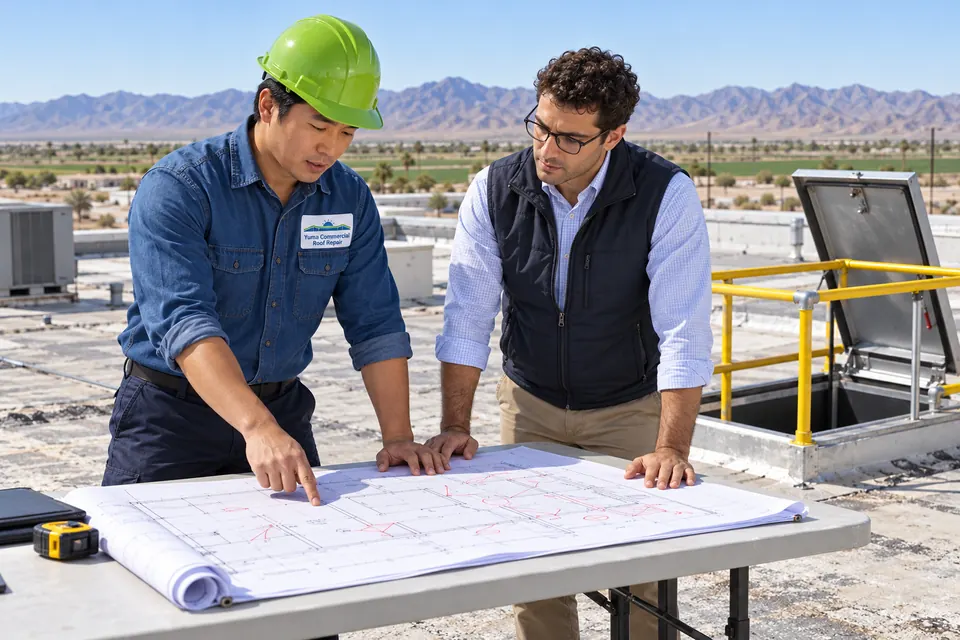
Most downtown leaks trace to the parapet or the low points beside it. These pairs show the usual matches.
Brown streaks near the ceiling line of a brick wall usually come from the parapet directly above.
Mortar and sealant at coping joints crack, and every rain sends water into the wall cavity.
Water at a rear entry often traces to the scupper box that drains the roof through the back wall.
Dust and debris fill the scupper box, so water ponds against the wall flashing beside it.
Corners collect water from two walls, so plaster at an inside corner softens first.
Membrane flashing shrinks and peels away from the masonry, opening a gap at the base of the parapet.
Tenants placing buckets under a skylight point to the curb or frame around it.
Older skylight curbs lose their flashing seal, and the frame lets water past at the corners.
A stale smell upstairs can mean insulation under the roof has stayed wet since the last storm.
Low spots along a parapet hold water against the wall flashing long after the rain stops.
Masonry walls hold heat and moisture differently from the roof beside them. Each season puts its own strain on the wall-to-roof joint.
Cleared scupper boxes send water out through the wall instead of pooling against the base of the parapet.
Resealed coping holds while the brick and metal expand at different rates in afternoons past 110°F.
Reset counterflashing keeps sideways rain from running behind the membrane at the top of the wall.
Cooler months leave room to confirm with city staff whether a visible cap or edge change needs design review.
Three services cover most downtown calls, from wall flashing to tracing a stain on an upper floor.
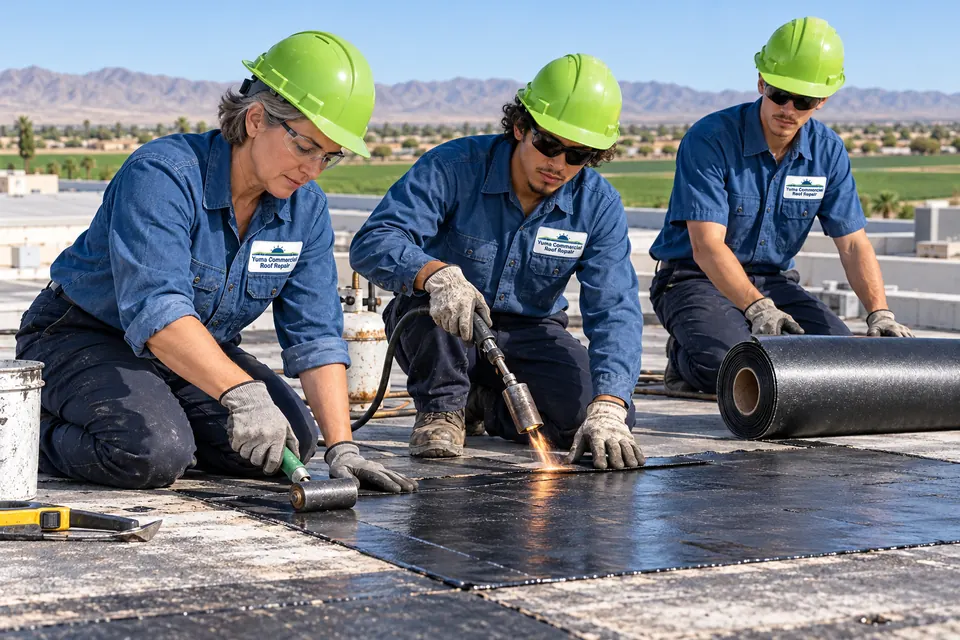
Flat roof repair downtown centers on the membrane flashing that climbs each parapet and the low spots that hold water beside it.
On This Repair Ticket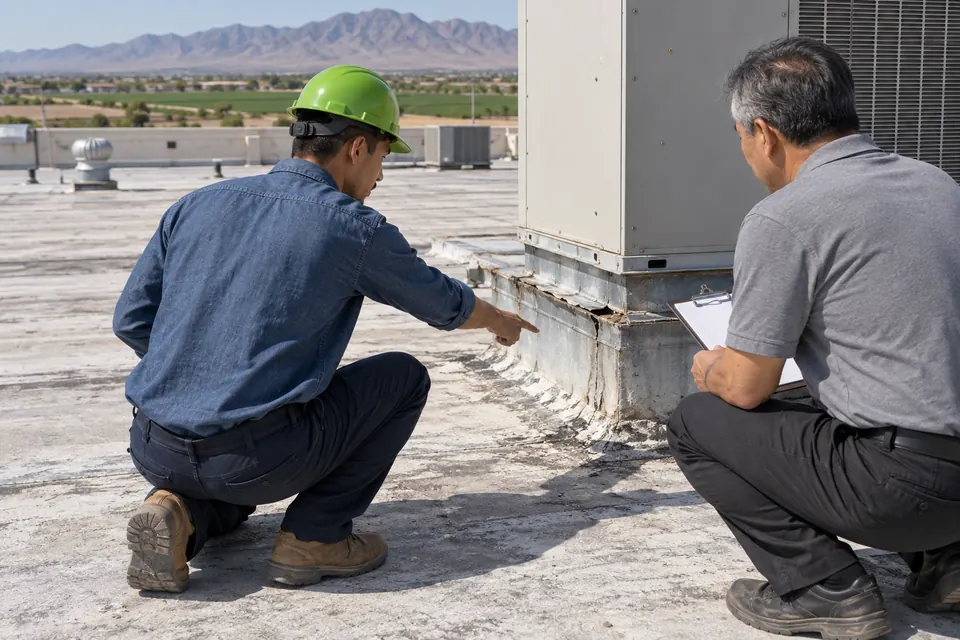
Leak tracing helps in older buildings where water can travel inside the masonry and surface a full room away from the roof opening.
On This Repair Ticket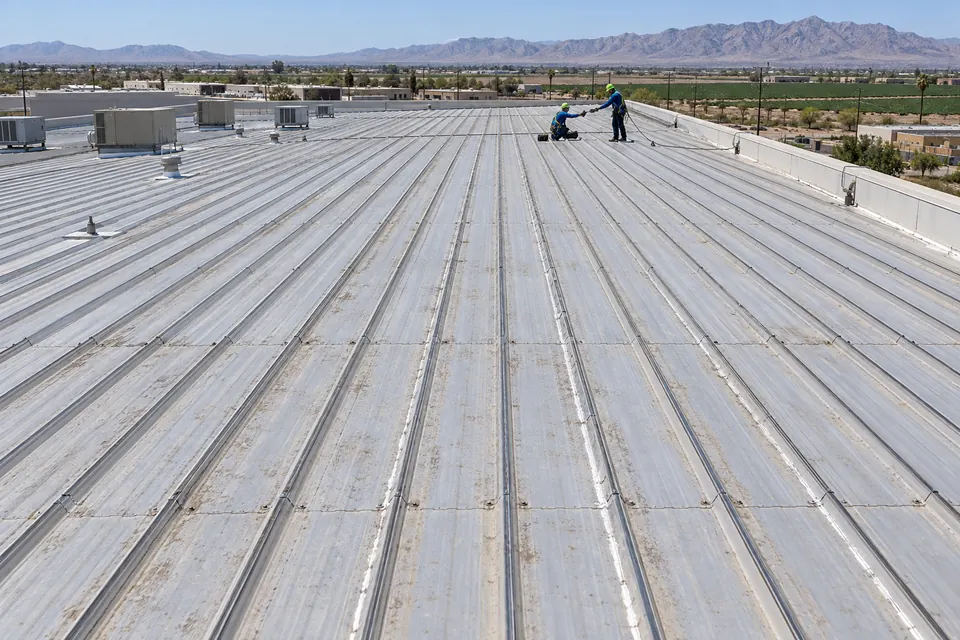
Metal repair covers the sloped metal roofs and canopies on some downtown buildings, where screws and trim loosen over time.
On This Repair TicketCall and tell us which wall is wet and whether the building sits in a historic district. We check the parapet above first.
Downtown repairs add a check on what is visible from the street, so the work stays clear of review unless a change truly needs it.
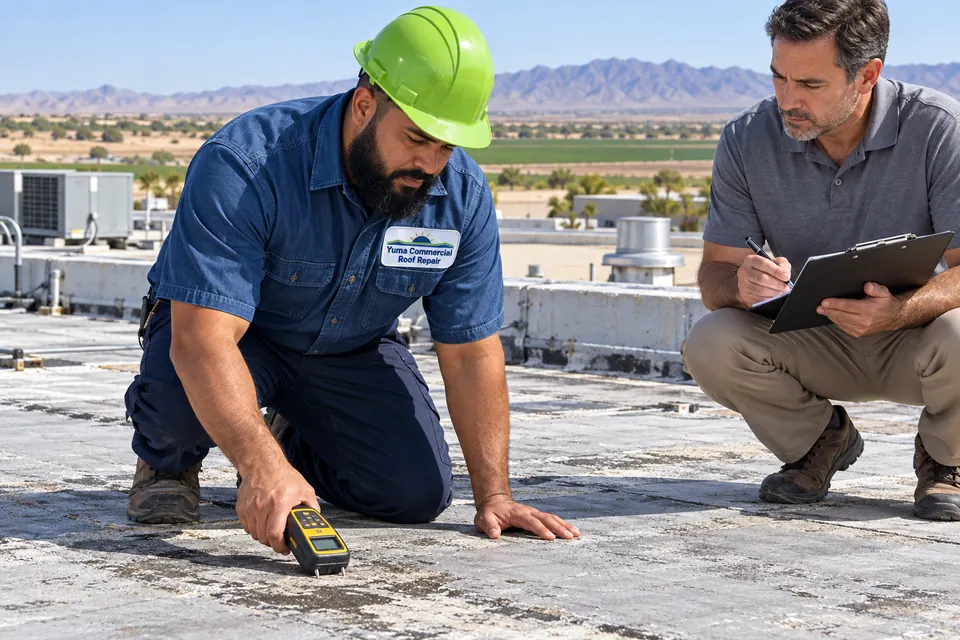
Coping, counterflashing, wall flashing, scuppers, skylights, and the field behind the parapet all get checked and noted.
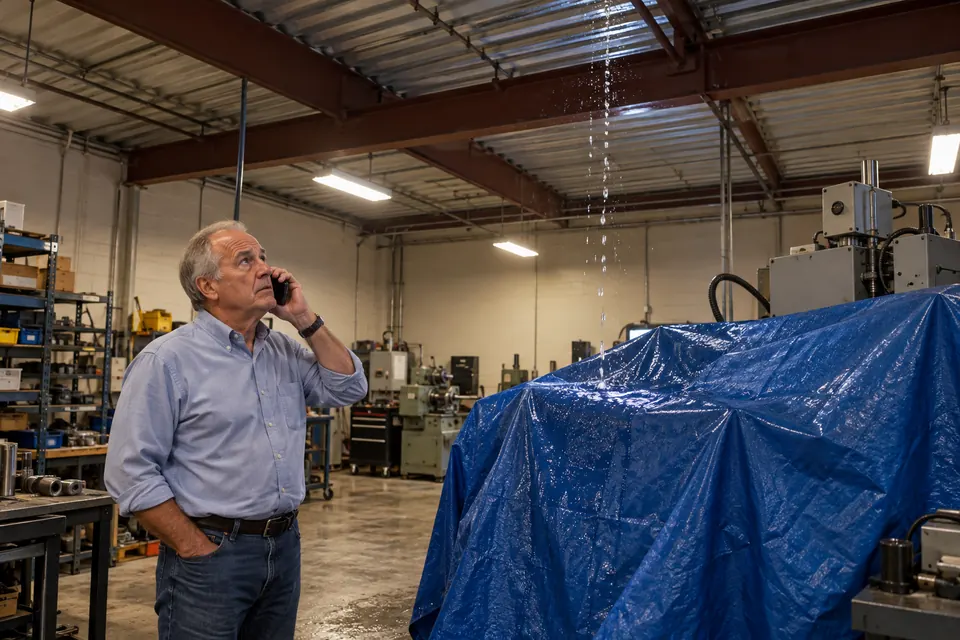
Interior wall stains get lined up with the parapet joints above, and suspect joints get a controlled water test.

Repairs hidden behind the parapet move ahead. Visible cap or edge changes get confirmed with City of Yuma staff before work.
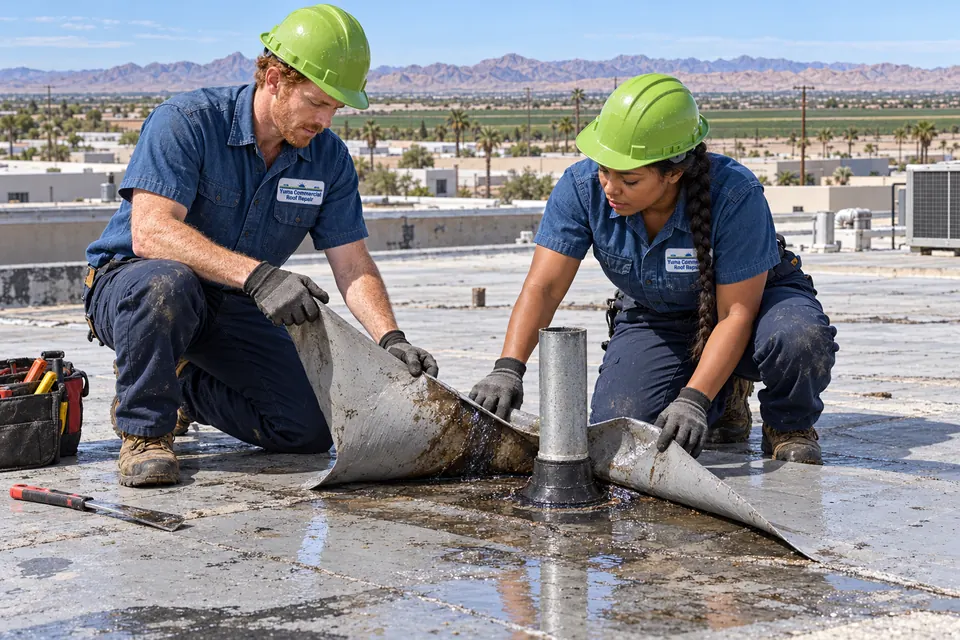
Joints in the coping get resealed or rebuilt, counterflashing reset, and wall flashing replaced with membrane matched to the roof.
A water test along the repaired wall confirms it holds, and photos of each joint go to you.
We also repair roofs in these nearby communities.
Retail roofs crowded with rooftop units, east on I-8.
Storm damage on buildings beside open fields.
Wide warehouse roofs that depend on many drains.
Metal farm and shop roofs far east on I-8.
Answers for owners of older downtown buildings.
For work visible from the street, it can. The City of Yuma Design and Historic Review Commission reviews exterior changes in the Main Street, Century Heights, and Brinley Avenue historic districts and on individually listed buildings.
A membrane repair hidden behind a parapet is less likely to need review than a new parapet cap or edge metal. We confirm with city staff before visible work.
City of Yuma Building Safety. Deck replacement, structural parapet work, and larger reroof areas are the jobs most likely to need a permit, so we confirm scope with the city first.
Water that gets past cracked coping soaks into the wall cavity and dries slowly. Resealing the coping stops new water, and the wall dries out over the following weeks.
Usually through a roof hatch or a ladder at the rear of the building. Materials come up by hand or hoist, and we agree on staging so sidewalks and alleys stay open.
Masonry repair is separate trade work. We repair the roof side of the wall: coping, counterflashing, wall flashing, and scuppers, and we point out brick damage for a mason.
Repairs hidden behind the parapet leave the street view as it was. Where a visible cap needs replacing, we match the existing profile and color after the city confirms what it requires.
Tell us which walls show water inside. We inspect the parapets and roof above and send a repair estimate with photos.
Leave a name and number and we will call to talk through the leak or damage.
Or call now: (928) 436-4828