Late Spring
A Full Drain Round
Clearing every drain and scupper in late spring heads off many monsoon leaks before the first storm arrives.

Commercial roof repair in San Luis for wide warehouse roofs, where dozens of drains and scuppers decide whether a storm leaves the roof or finds a seam.
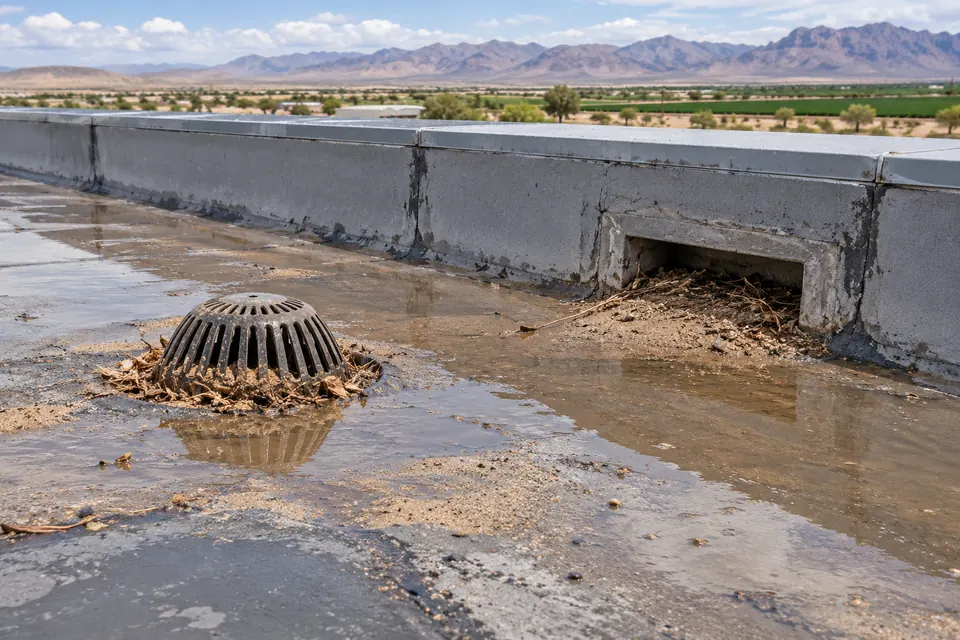
Warehouses near the border run large flat roofs that slope to many interior drains. Each drain is a place where sand collects and water can stall.
Wind carries fine dust onto these roofs all year, and with so little rain nothing flushes it off. It packs around strainers and hardens in the drain bowls, so the next storm ponds and pushes against the nearest weak seam.
Repairs here start at the drains. We clear each bowl, check the clamp ring and sealant, look at the overflow path, and repair the membrane where standing water has been working at it.

On a big roof, the drains and the ground between them cause most of the trouble. Here is how it shows up below.
Roof drains often run down beside columns, so drips at a column line point to the drain above.
Hardened dust around the strainer slows water, and the clamp ring sealant cracks under the standing load.
Wide stains over racking mean water spread along the deck before dropping between beams.
Water stalls in the low ground between drains when either one clogs, soaking the seams nearby.
Dock-side leaks usually come from the roof edge, where scuppers drain the roof over the dock doors.
Sand fills the scupper opening, and water rises against the edge flashing until it finds a way in.
A warmer, humid zone in part of the warehouse can mark wet insulation under a section that ponds.
Membrane feels soft underfoot where boards below have taken on water from a long-standing pond.
Drips that show up only in heavy rain point to overflow paths that cannot keep up.
Seams that sit at the edge of a regular pond take the longest soak and open first.
Drains on large roofs need attention on a schedule. Each card ties a season to what clear drains and repaired seams prevent.
Clearing every drain and scupper in late spring heads off many monsoon leaks before the first storm arrives.
Repaired seams at pond edges hold through heat that passes 110°F and keeps the membrane moving.
Open drains and working overflows move a heavy burst of rain off a big roof before it backs up.
A big dust storm can refill drains in one afternoon, so a short check afterward keeps the bowls open.
These three services cover most warehouse and commercial roof calls in San Luis.

Flat roof repair handles the drains, clamp rings, and pond-edge seams on the wide membrane roofs common to San Luis warehouses.
On This Repair Ticket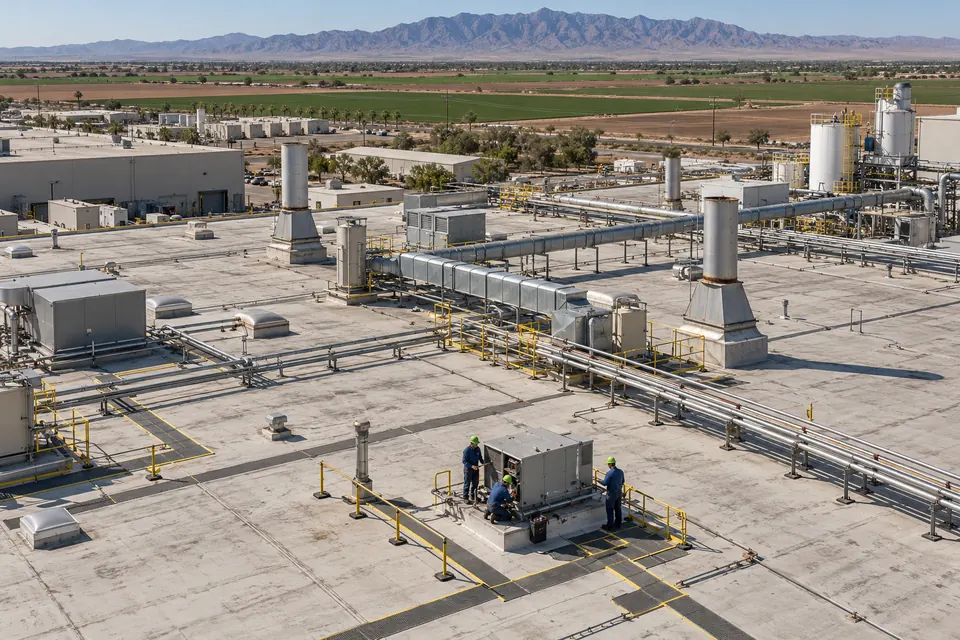
Industrial repair fits distribution and cold storage buildings where condensers and docks share the roof edge with scuppers.
On This Repair Ticket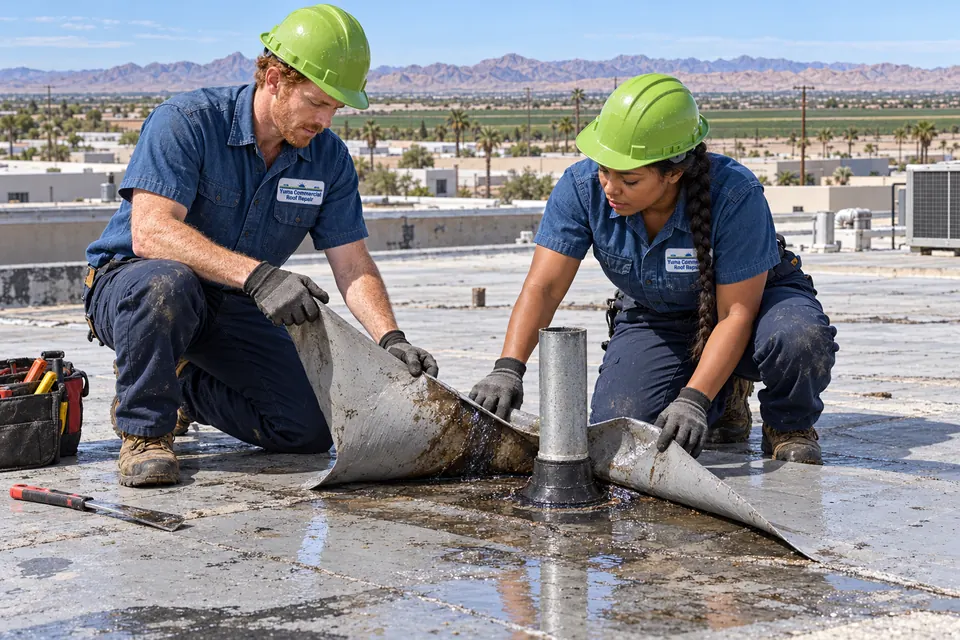
Leak tracing pins down which of many drains or seams is behind a stain on a roof too big to guess about.
On This Repair TicketCall with the building size and how many drains you know of. We check each one and the seams beside any standing water.
On large roofs, the visit works drain by drain, so none get missed between the ponds.

Each drain, scupper, overflow, and seam near standing water gets checked and numbered on a roof plan.
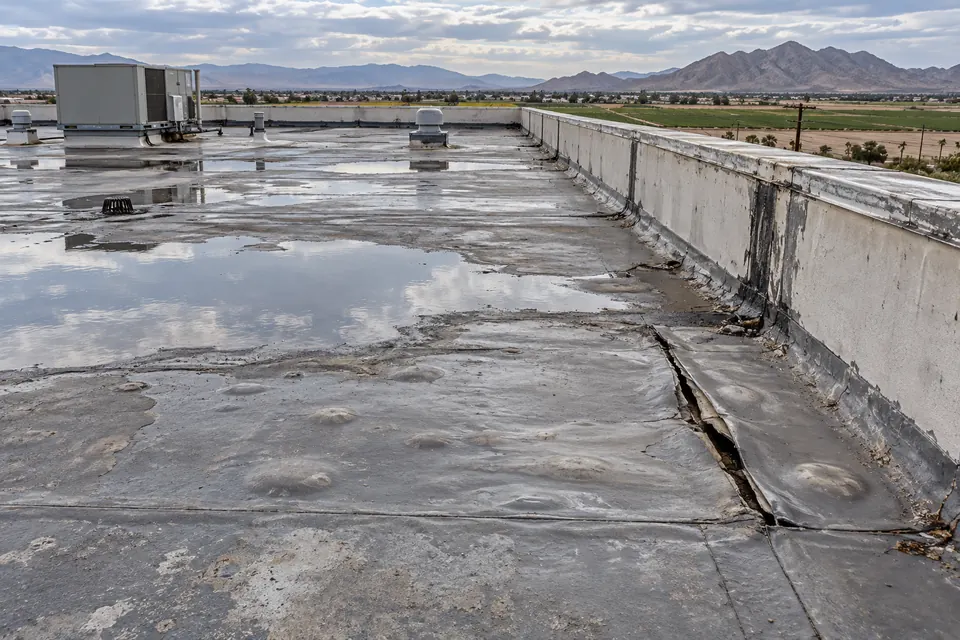
Crusted sand and debris come out of bowls and scuppers, and missing strainers get noted for replacement.

Loose clamp rings get pulled, the drain bowls cleaned, fresh sealant applied, and rings re-set with new bolts where needed.
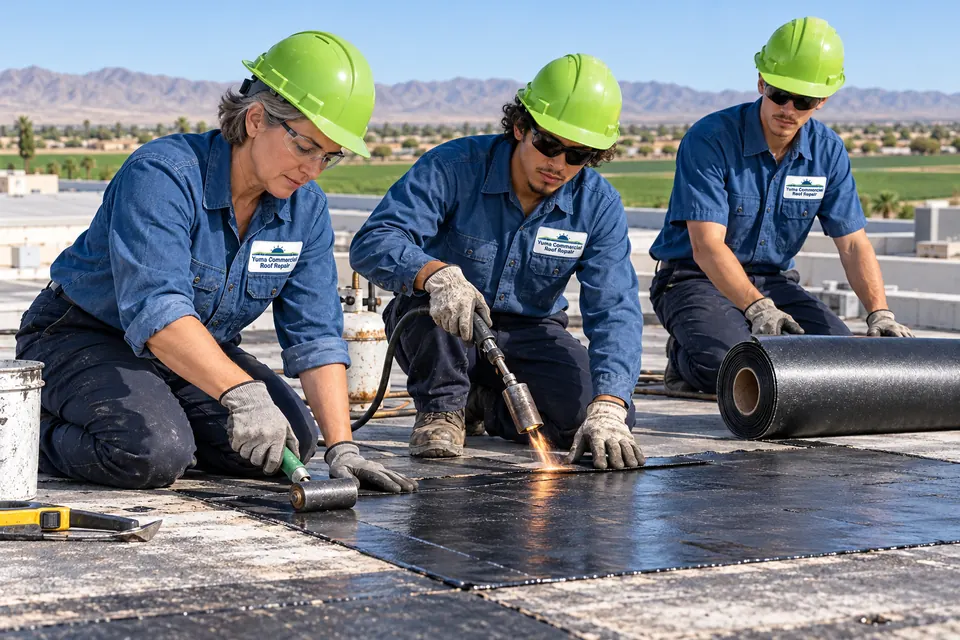
Seams soaked by standing water get repaired with matched membrane, and wet boards under them get replaced.
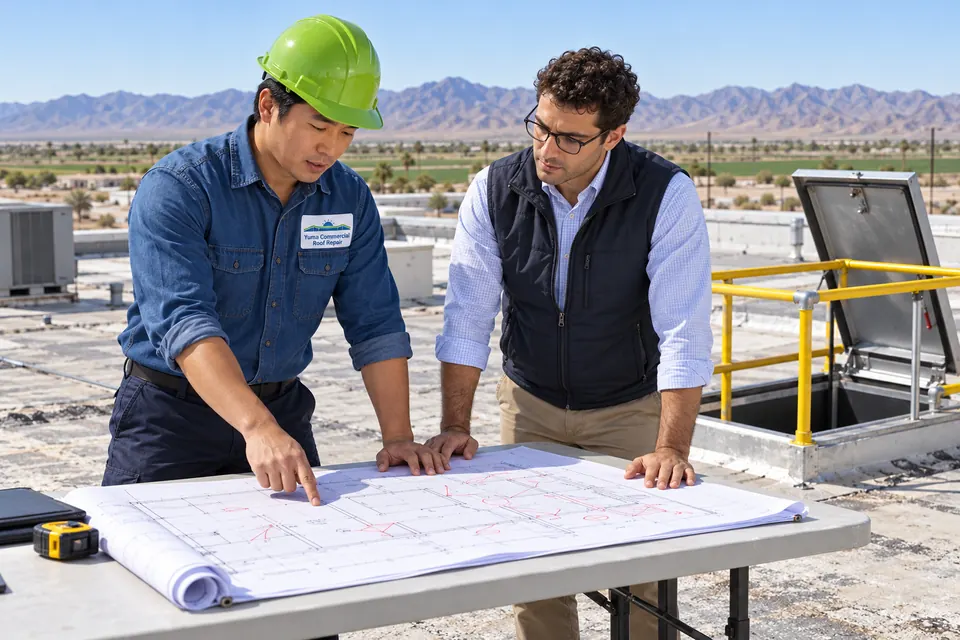
Water poured at each repaired drain confirms it runs free, and the numbered roof plan with photos goes to you.
We also repair roofs north and east of San Luis.
North on US 95, with farm-edge storm damage.
Parapet walls and coping on older brick buildings.
Rooftop units on retail and office centers.
Metal shops and farm buildings past Yuma.
Answers for owners and managers of large flat roofs in San Luis.
Wind carries fine dust and sand onto roofs all year, and with so little rain nothing flushes it off. It settles in drain bowls, scupper boxes, and gutters, then hardens into a crust around the strainers.
When a storm hits, water backs up, ponds, and finds the nearest weak seam. Clearing drains in late spring, and again after a big dust storm, heads off many monsoon leaks.
City of San Luis Building Safety. Deck replacement and larger reroof areas are the jobs most likely to need a permit, so scope gets confirmed with the city before that kind of work.
That depends on the roof area and slope set in the original design. We check that every existing drain and overflow works, and flag areas where water stands far from any drain.
Yes. Drain clearing and strainer replacement can be a stand-alone visit. If we find cracked clamp ring sealant or soaked seams nearby, the estimate lists those repairs separately.
Not on its own. Ponding that clears within a couple of days after drains are open is common. A pond that sags the deck or never drains is the sign of a bigger problem.
Yes. Roof access gets set away from active dock doors, and any work at the roof edge over the docks gets scheduled with your shipping hours.
Send the address and where water stands on the roof. We check every drain and the seams beside it and price the repair.
Leave a name and number and we will call to talk through the leak or damage.
Or call now: (928) 436-4828